
- August 27th, 2026
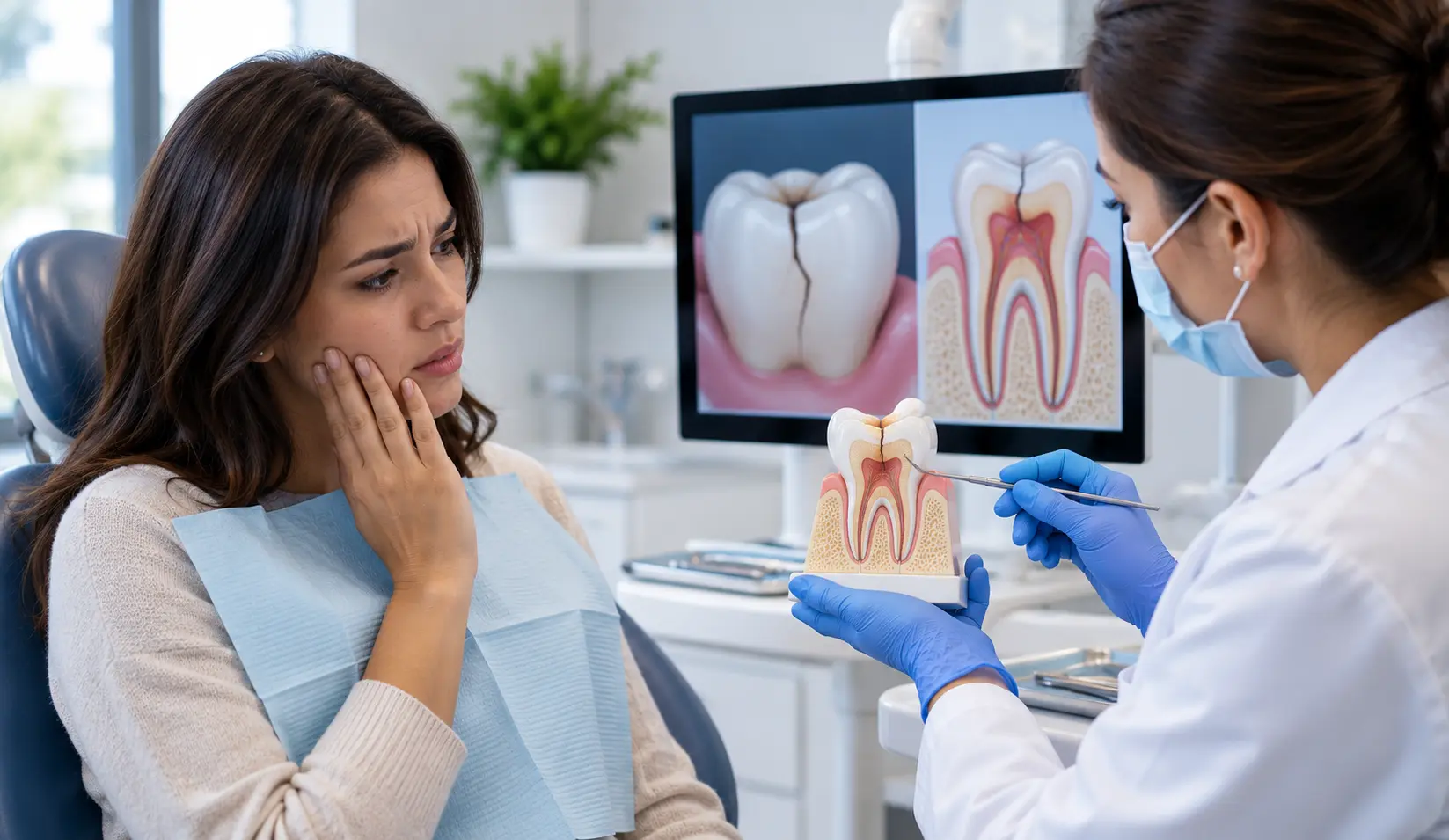
A cracked or damaged tooth can seem like a minor dental problem, especially when the discomfort is mild or comes and goes. You may be tempted to wait and see whether it gets better on its own. Unfortunately, a damaged tooth usually does not repair itself. In many cases, delaying treatment can allow a small crack or weakened area to become a much more serious dental problem.
A tooth can become damaged because of biting down on hard foods, an injury, teeth grinding, untreated cavities, large fillings, normal wear, or other factors. While some minor chips may not require extensive treatment, cracks that extend deeper into the tooth can compromise its structure and potentially affect the inner pulp.
If you notice pain when chewing, sensitivity to hot or cold foods, swelling around a tooth, a sharp edge, or a visible crack, it is important to have the tooth evaluated by a dental professional. Early treatment may help protect the remaining healthy tooth structure and give you more treatment options.
For patients looking for a dental crown Chino Hills CA, understanding why cracked teeth should not be ignored is an important part of protecting long-term oral health.
Why Is a Cracked Tooth a Serious Problem?
Teeth are remarkably strong, but they are not indestructible. Once a tooth develops a crack, the damaged area can become vulnerable to additional pressure every time you bite or chew.
Unlike a broken bone, a tooth does not naturally heal itself after a significant crack develops. The crack may remain stable for a period of time, but it can also gradually spread.
The severity depends on factors such as:
- The location of the crack
- How deep the crack extends
- Whether the tooth’s pulp is affected
- Whether bacteria can enter the damaged area
- How much healthy tooth structure remains
- The amount of pressure placed on the tooth
A dental examination can help determine whether the tooth can be repaired or whether another treatment is necessary.
What Happens If You Ignore a Cracked or Damaged Tooth?
Ignoring a damaged tooth may seem convenient in the short term, particularly if you are not experiencing severe pain. However, delaying treatment can lead to several complications.
1. The Crack Can Become Larger
One of the most common concerns with an untreated cracked tooth is that the damage can progress.
Every time you bite down, your teeth experience pressure. A weakened tooth may flex slightly under that pressure, placing additional stress on the existing crack.
A crack that initially causes occasional sensitivity may eventually become deeper or longer. Once more tooth structure is compromised, treatment can become more complicated.
This is why contacting a cracked tooth dentist Chino Hills CA promptly can be beneficial when you notice signs of damage.
2. You May Experience Increasing Tooth Pain
A cracked tooth does not always cause constant pain.
You may initially notice discomfort only when:
- Biting down
- Releasing your bite
- Eating something cold
- Drinking something hot
- Eating sweets
- Chewing on one side of your mouth
Over time, the symptoms may become more frequent or intense.
Some people also experience pain that seems difficult to locate because the damaged tooth may hurt intermittently rather than continuously.
If your tooth hurts when you chew or suddenly becomes sensitive, it is worth having it examined rather than assuming the discomfort will disappear.
3. Bacteria Can Reach the Inner Tooth
The outer layers of a tooth provide protection for the pulp, which contains nerves and blood vessels.
When a crack extends through the protective tooth structure, bacteria can potentially travel deeper into the tooth.
If bacteria reach the pulp, inflammation or infection may develop. This can cause symptoms such as:
- Persistent toothache
- Increased sensitivity
- Pain when biting
- Swelling
- Tenderness around the tooth
- Bad taste or drainage in the mouth
At this point, a simple repair may no longer be enough. Depending on the condition of the tooth, treatment could involve a root canal followed by a restoration such as a crown.
4. An Infection Could Develop
An untreated damaged tooth can sometimes become infected when bacteria reach the pulp.
Dental infections should not be ignored. An infection may cause localized swelling, discomfort, or an abscess around the tooth.
Some infections can initially produce relatively mild symptoms, so the absence of severe pain does not necessarily mean that everything is fine.
If you develop facial swelling, significant swelling in the mouth, fever, difficulty swallowing, or difficulty breathing, seek urgent medical attention.
5. The Tooth Could Break Further
A cracked tooth is already structurally weaker than a healthy tooth.
Continuing to chew normally on it can put additional pressure on the damaged area. Something as ordinary as biting into a hard food can cause a piece of the tooth to break away.
A tooth that could initially have been restored may become more difficult to save after additional damage occurs.
This is one reason dentists often recommend evaluating damaged teeth as soon as possible.
6. You May Lose More Healthy Tooth Structure
The sooner a damaged tooth is evaluated, the sooner a dentist can determine how much healthy structure remains.
Waiting until a large portion of the tooth breaks can reduce the amount of tooth available for restoration.
When enough healthy structure remains, a dental restoration may be able to reinforce and protect the tooth.
In appropriate cases, a dental crown can cover and protect a weakened tooth, helping restore its shape, function, and appearance.
When Might a Dental Crown Be Recommended?
A dental crown is a custom-made restoration designed to cover a damaged or weakened tooth.
Depending on the condition of the tooth, a crown may be considered when a tooth has:
- Significant structural damage
- A large filling with insufficient remaining tooth structure
- A crack that can be restored
- Extensive decay
- Been treated with a root canal
- Become weakened or fractured
A crown essentially surrounds the remaining tooth structure and provides additional protection during normal chewing.
However, not every cracked tooth needs a crown. The appropriate treatment depends on the location and severity of the crack and the overall health of the tooth.
If you are researching dental crowns Chino Hills CA, a dental examination is an important first step. A dentist can evaluate the tooth and explain whether a crown, filling, root canal, extraction, or another treatment is appropriate.
What Is the Difference Between a Cracked Tooth and a Chipped Tooth?
Not all dental damage is the same.
A chipped tooth usually involves a small piece of enamel breaking away. Minor chips may sometimes be repaired with cosmetic bonding or another conservative treatment.
A cracked tooth, however, involves a fracture line through the tooth. Depending on its depth and location, a crack can compromise the tooth’s structural integrity.
A severely damaged tooth may be considered a broken tooth, particularly when a significant portion has fractured or separated.
Because the treatment varies according to the type and extent of damage, it is best not to diagnose the problem yourself.
Common Causes of Cracked and Damaged Teeth
Understanding how tooth damage happens can help you reduce your risk.
Biting Hard Foods
Ice, hard candy, popcorn kernels, nuts, and other hard foods can place substantial force on teeth.
Avoid using your teeth to crack shells, open packages, or bite through hard objects.
Teeth Grinding
Grinding or clenching your teeth can place excessive pressure on them.
People who grind their teeth at night may not realize they are doing it. Over time, repeated pressure can contribute to enamel wear, fractures, and sensitivity.
Large Fillings
A tooth with a large filling may have less natural tooth structure remaining. Depending on the situation, the tooth may become more vulnerable to cracking.
Your dentist can determine whether a heavily restored tooth could benefit from additional protection.
Dental Trauma
Sports injuries, falls, accidents, and other impacts can damage teeth.
Even if the tooth does not immediately hurt after an injury, a dental examination can help identify damage that may not be obvious.
Untreated Tooth Decay
Cavities weaken tooth structure. If decay progresses significantly, the remaining tooth may become more susceptible to fracture.
Treating cavities early can help preserve more of the natural tooth.
Normal Wear and Aging
Teeth experience years of chewing pressure. Over time, they can become more susceptible to cracks and other forms of wear.
This does not mean damaged teeth are inevitable, but preventive dental care becomes increasingly important.
Signs You Should See a Dentist
Some dental problems are obvious, while others produce subtle symptoms.
Schedule a dental evaluation if you notice:
- A visible crack
- A piece of your tooth has broken off
- Pain while chewing
- Sensitivity to cold or hot foods
- Sharp pain that comes and goes
- A rough or sharp edge on a tooth
- Swelling near the tooth
- Persistent toothache
- Pain after dental trauma
- A tooth that feels different when you bite
Even if the discomfort disappears, the underlying problem may still be present.
What Happens During an Evaluation?
When you visit a dentist for a damaged tooth, the dental team will typically evaluate the tooth and surrounding tissues.
The dentist may:
- Ask about your symptoms and when they started.
- Examine the tooth visually.
- Check your bite and areas of tenderness.
- Evaluate sensitivity when appropriate.
- Take dental X-rays when indicated.
- Determine the extent of the damage.
- Discuss treatment options.
Not every crack can be identified through a standard X-ray, so your dentist may use several examination methods to understand the problem.
The goal is to determine whether the tooth can be restored and which treatment offers the most appropriate solution.
What Are the Treatment Options for a Damaged Tooth?
Treatment depends on the type and severity of the damage.
Dental Filling or Bonding
For minor chips or areas of damage, a filling or bonding procedure may be sufficient.
These treatments can restore a small amount of lost tooth structure without requiring a full crown.
Dental Crown
A crown may be recommended when a tooth has significant structural damage but can still be restored.
The crown is designed to cover the tooth and provide protection while restoring its function.
For people searching for dental crown Chino Hills CA, discussing your specific tooth condition with a qualified dental professional is the best way to determine whether a crown is appropriate.
Root Canal Treatment
If the damage has affected the pulp and caused inflammation or infection, root canal treatment may be necessary.
A root canal removes infected or inflamed tissue from inside the tooth. Afterward, the tooth may require a crown or another appropriate restoration to protect it.
Tooth Extraction
Unfortunately, some severely cracked teeth cannot be predictably restored.
If a crack extends into areas that make restoration impossible, extraction may be recommended. Your dentist can discuss tooth replacement options if removal becomes necessary.
Why Early Broken Tooth Treatment Matters
When you search for broken tooth treatment Chino Hills CA, you may find several potential solutions, but the right approach depends on your specific situation.
Early evaluation can help answer important questions:
- Is the tooth cracked or simply chipped?
- How deep is the damage?
- Is the pulp involved?
- Is there an infection?
- Can the tooth be restored?
- Would a crown provide adequate protection?
- Is root canal treatment needed?
- Is extraction unavoidable?
The earlier these questions are answered, the sooner you can make an informed decision about your oral health.
What Should You Do Until You See a Dentist?
If you have damaged a tooth, take reasonable steps to avoid making the situation worse while arranging an appointment.
Consider:
- Avoiding hard, crunchy, or sticky foods.
- Chewing on the opposite side of your mouth.
- Keeping the area clean with gentle brushing.
- Rinsing your mouth with water after eating.
- Avoiding extremely hot or cold foods if they trigger sensitivity.
- Saving any broken tooth fragment and bringing it to your dental appointment when possible.
Do not attempt to glue a broken tooth back together with household adhesives.
If you experience significant swelling, uncontrolled bleeding, severe facial trauma, or difficulty breathing or swallowing, seek urgent medical care.
Can a Cracked Tooth Be Prevented?
You cannot prevent every dental injury, but several habits can reduce your risk.
Protect Your Teeth During Sports
Wear an appropriate mouthguard during contact sports or activities where facial injuries are possible.
Avoid Chewing Ice
Chewing ice can place unnecessary stress on teeth and may contribute to chips and fractures.
Don’t Use Teeth as Tools
Your teeth are designed for eating—not opening packages, cutting objects, or cracking hard materials.
Address Teeth Grinding
If you grind or clench your teeth, talk with your dentist. A professionally recommended nightguard or other treatment may help protect your teeth.
Maintain Regular Dental Visits
Routine dental examinations can help identify decay, worn restorations, weakened teeth, and other problems before they become more serious.
Why Choose Crossroads Family Dentist?
At Crossroads Family Dentist, the focus is on providing individualized and compassionate dental care for patients and families.
Dr. Martha Torres, DDS, has more than nine years of experience and takes time to listen to patients, understand their concerns, and explain treatment options.
The practice provides a range of dental services, including:
- Dental crowns
- Root canal treatment
- Dental fillings
- Dental implants
- Dental examinations and cleanings
- General dentistry
- Family dentistry
- Cosmetic dentistry
- Clear aligners
- Teeth whitening
The team emphasizes comfortable, respectful care and takes the time to explain procedures and treatment recommendations.
If you have a cracked, chipped, or broken tooth, an evaluation can help determine the condition of the tooth and whether restorative treatment may help preserve it.
Don’t Wait Until a Cracked Tooth Becomes an Emergency
A damaged tooth may not always hurt immediately, but that does not mean the problem should be ignored.
A small crack can become larger. A weakened tooth can break further. Bacteria may reach the inner portion of the tooth and contribute to infection. In some situations, delaying treatment can turn a relatively manageable restoration into a more complicated dental procedure.
The good news is that many damaged teeth can be treated when they are evaluated promptly.
If you are experiencing tooth sensitivity, pain when biting, a visible crack, or a broken tooth, contact Crossroads Family Dentist to schedule an examination. The dental team can assess the tooth and explain your treatment options based on your individual needs.
Crossroads Family Dentist
Phone: (909) 548-3031
Same-day appointments are available.